Bangkok Flights Edge Closer
EZY AIRLINES GRANTED LICENCE AND ROUTE ALLOCATION

The granting of a civil aviation operating licence and route allocation for flights between Hua Hin and Bangkok to Ezy Airlines, who are operated by M-Landarch Co Ltd, has brought the prospect of faster travel to the capital a step closer, over two decades since such a service was previously available. The confirmation from officials was announced during a Prachuap Khiri Khan Joint Public and Private Sector Committee (JPPC) meeting this week, which was discussing the province’s tourism performance. One of the meeting’s discussions was to discuss the idea of a formal letter of support regarding the launch of scheduled flights.
All previous press releases concerning the flights, and the JPPC meeting, have stressed, or implied, the intention “to serve international and high-value travellers”, and “high-value travel experiences”, which suggests that the ticket prices may not be for the budget traveller, nor an option for regular tourist travel to and from the destinations due to the likely limitations on baggage, although the mention of “golf activities” does contradict this somewhat, so in every regard it is a case of wait and see. With only two weeks left in December at the time of writing, if services are going to begin this month, an announcement of the details must be imminent, but it shouldn’t be a surprise if this comes next year.
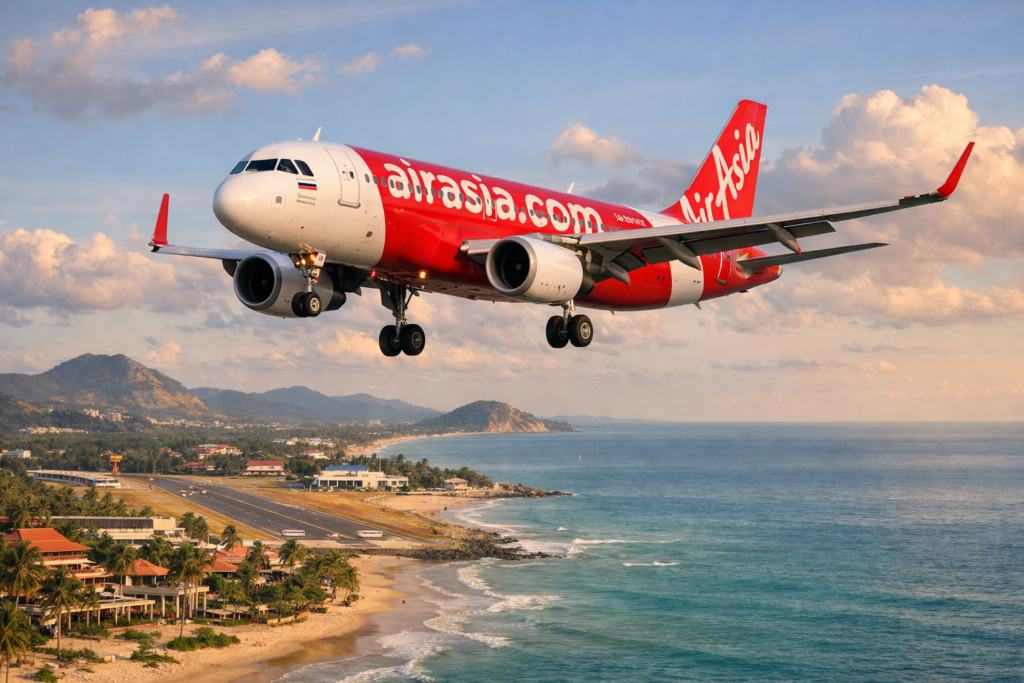
Prior to Covid, there were flights by AirAsia, not only to Chiang Mai, which of course still runs now, but also Kuala Lumpur; many expected the latter to resume once the travel restrictions between Thailand and Malaysia were lifted, and there has been general puzzlement that they have not, as it appeared to be a well used route; there was an announcement that they would resume in June 2022, but this was abruptly cancelled, and it seems like it has been a victim of both route rationalisation and an assessment of unfavourable market conditions, combined with significant financial issues for parent company Capital A; maybe a reassessment will occur as they are about to complete the sale of the business to its medium-haul low-cost sister firm AirAsia X this month, which will consolidate all seven airlines across Malaysia, Thailand, Indonesia, the Philippines and Cambodia under a single brand and network. The AirAsia X brand will be discontinued as the group merges short-haul and medium-to-long-haul operations. The unified group will be called AirAsia Group, and plans to expand from 143 destinations currently to 175 over the next 10 years.
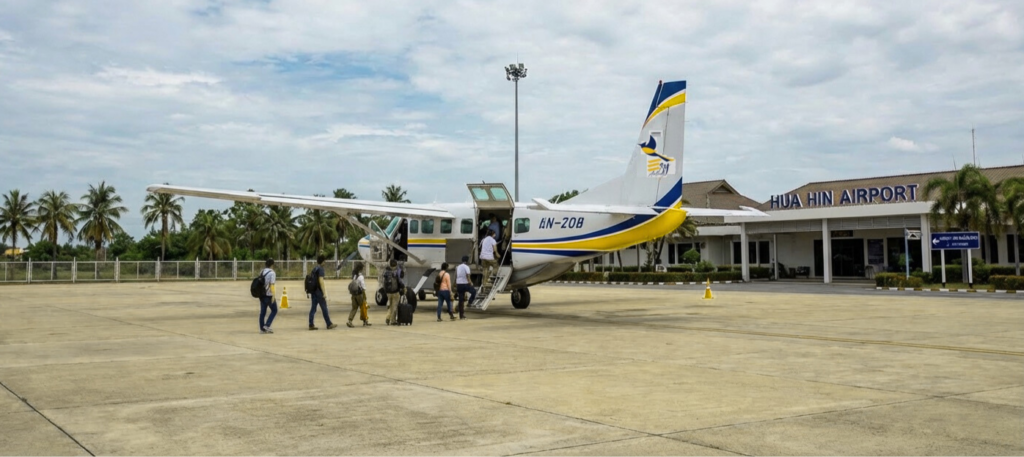
Featured image: AI image of an Ezy Airlines plane boarding at Hua Hin Airport