
Your Horoscopes
Aries | March 21 to April 19

Taurus | April 20 to May 20

Gemini | May 21 to June 20

Cancer | June 21 to July 22

Please log in to view your author dashboard.

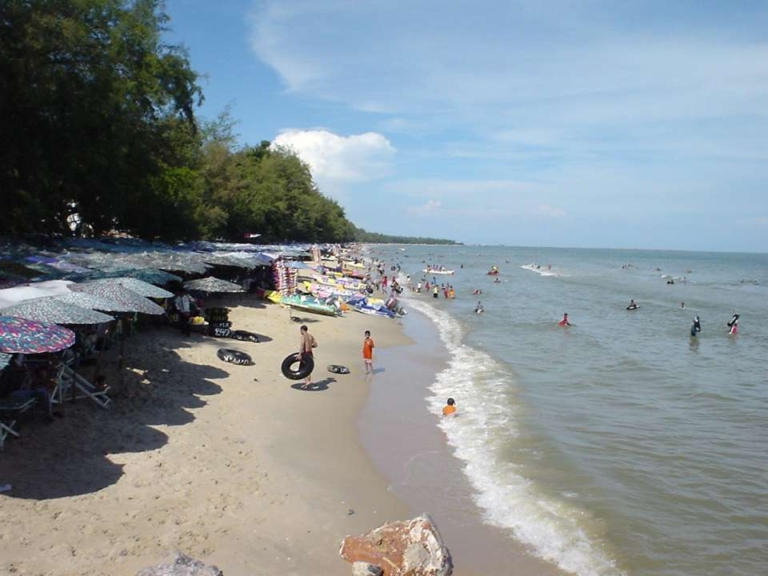
Have you ever wished to go to a beach completely free of umbrellas, deckchairs, tables and other things cluttering the natural beauty? Well, after the initial Wednesdays in Cha Am promotion, where the local authorities set aside a five kilometre stretch of the beach to be an ‘umbrellas and deckchairs not welcome’ space, they have now expanded this so that every weekday at the southern end of Cha-am Beach the beach will be completely open to create a more natural, and relaxed beach experience, free to be used by beachgoers as they wish – so, for example, pitching their own tent or placing their own beach mat so they can enjoy the beach as nature provided, rather than the rather more crowded experience at the central part, similar to the area on Hua Hin Beach near the Hilton, particularly at weekends.
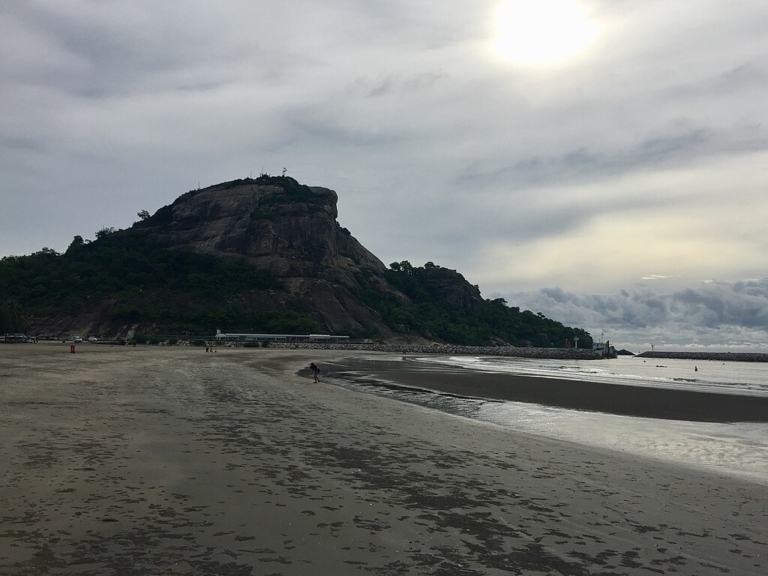
The body of a 63 year old Canadian tourist was recovered on 10th January from the sea off Sam Roi Yot district in Prachuap Khiri Khan province, three days after he was swept away by strong waves while swimming. The ongoing search had been paused until sea conditions improved, but a local fishing boat spotted a body floating near Don Ta Khaeng sandbank, about one nautical mile offshore, and brought it ashore after reporting it to police. The deceased was noted immediately as a foreign male, approximately 60 years old, wearing grey swimwear, and with distinctive tattoos on the left shoulder and right arm. No wounds or signs of assault were found and authorities estimated that he had been dead for at least two days before being recovered, after which the body was taken to Sam Roi Yot Hospital for preservation.

There was a tragic end to 2025 as a Myanmar migrant worker was stabbed during an argument between two groups that had gathered on the Hua Hin Fishing Pier, with the incident occurring shortly before midnight. Police from Hua Hin Police Station were called to reports of a serious assault and found the victim seriously injured; he was rushed to Hua Hin Hospital, but unfortunately died from the injuries sustained. The victim has since been identified as Mr Her Hai Yin, aged 20, and on 3rd January the superintendent of Hua Hin Police Station, Pol Col Kampanat Na Wichai, announced that one man had been arrested and two others had been detained in connection with the assault.

Sorry to disappoint you but the title might suggest that we were going to reveal the long lost origin of the nursery rhyme, but sadly this will remain lost in the mists of time; however, we are going to examine the word meadow, and it’s origin, as it leads on to a series of interesting connections to ancient and modern words and practices. Meadow, mead (a grassy field), mow, and the math in aftermath are all related, coming from the same Indo-European root, me-, “to cut down grass with a sickle or scythe”. So a meadow is a place where grass was cut for hay. Today we may think of meadows as natural places where wildflowers and animals abound, but in the Old World, many meadows were probably mown by man for thousands of years. The word is very old and dates from at least the 10th century (as do the other words mentioned above) in English, and there are cognates (see below) in several other Germanic languages. A cognate is a word in one language that has the same origin as a word in another language, resulting in similar spellings, pronunciations, and meanings. Regarding aftermath, today it means the “state or condition left by a (usually unpleasant) event”, but it was originally “a second mowing of grass” or “the crop of grass which springs up after the mowing in early summer”. It is not clear why cut grass came to be equated with an unpleasant event – but, regardless, math simply means “a mowing”.

As Hua Hin has continued to grow, annual events grow with them, and two that have been running for several years are highlighted this week. Coming very soon is the 14th Hua Hin World Cup, taking place on the 13th and 14th December, while announced last week was the date for a more recent addition, first run in 2018, the Hua Hin Marathon for 2026, which is scheduled for 10th May 2026. Both events attract more competitors and supporters every year, with registration still open for the football, and for the marathon it opened this week.

A small but significant step was taken last week by the Hua Hin City Municipality when plans were further outlined to relocate all the overhead cables running along Damnoen Kasem Road to be placed underground; for those unfamiliar with the street names, this is the road that stretches from the old, historic railway station to the beach, and is for many tourists, their first and most frequent view of Hua Hin. This sort of project has been undertaken or is being planned in many areas of Bangkok (see featured image above of an MEA project on the appropriately named Wireless Road) as the safety, maintenance and aesthetics of the cable chaos that is common in Thailand are finally being addressed (and should be applauded).
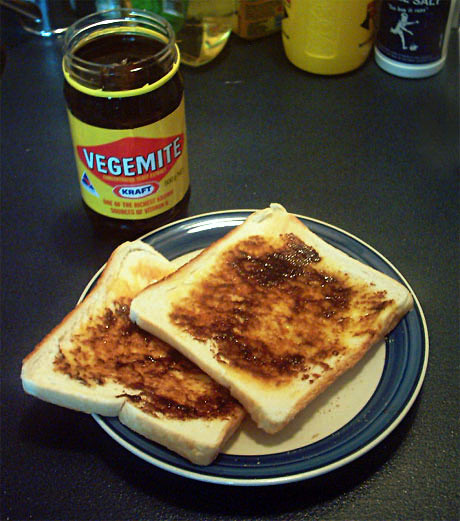
Vegemite, the Australian yeast-based spread that polarizes opinion just as Marmite does in the UK, is at the centre of a bizarre, and some might say, tasteless, lawsuit brought by an inmate of a prison in the state of Victoria. The prisoner, Andre McKechnie, 54, serving a life sentence for murder, is suing Victoria’s Department of Justice and Community Safety and the agency that manages the prisons, Corrections Victoria, because the salty, sticky, brown byproduct of brewing beer has been banned in Victorian prisons since 2006, because Corrections Victoria says it “interferes with narcotic detection dogs.” Inmates used to smear packages of illicit drugs with Vegemite in the hope that the odour would distract the dogs from the contraband.

While “The Back Page” will normally feature spoof sports stories, this time truth is stranger than fiction; the annual Official Strongman Games finished a couple of days ago in Arlington, Texas, and the story that has had people in turn smacking their forehead in disbelief, and ranting on social media, was the announcement of the winner of the World’s Strongest Woman, Jammie Booker from the USA, who narrowly defeated the runner-up, UK lifter Andrea Thompson. Thompson ended up coming second in the competition because of her performance in the final ‘Stone Series’ challenge, where the women had to lift four stones over a 42-inch beam, with each weighing up to 300 pounds. Booker loaded three stones in just over 29 seconds, while Thompson only loaded one.
